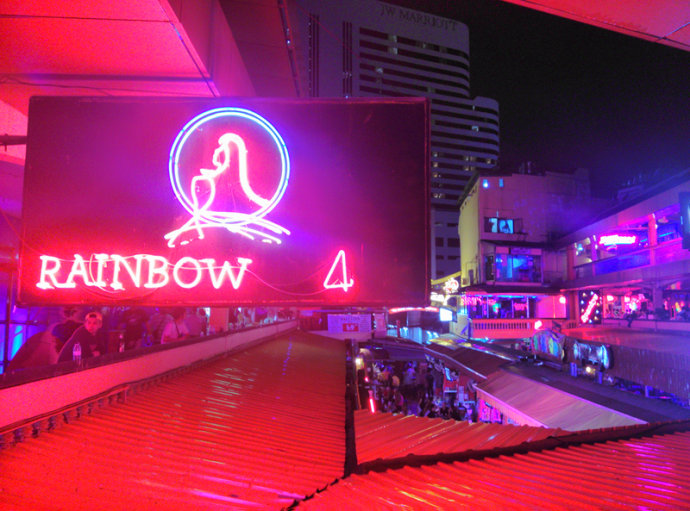
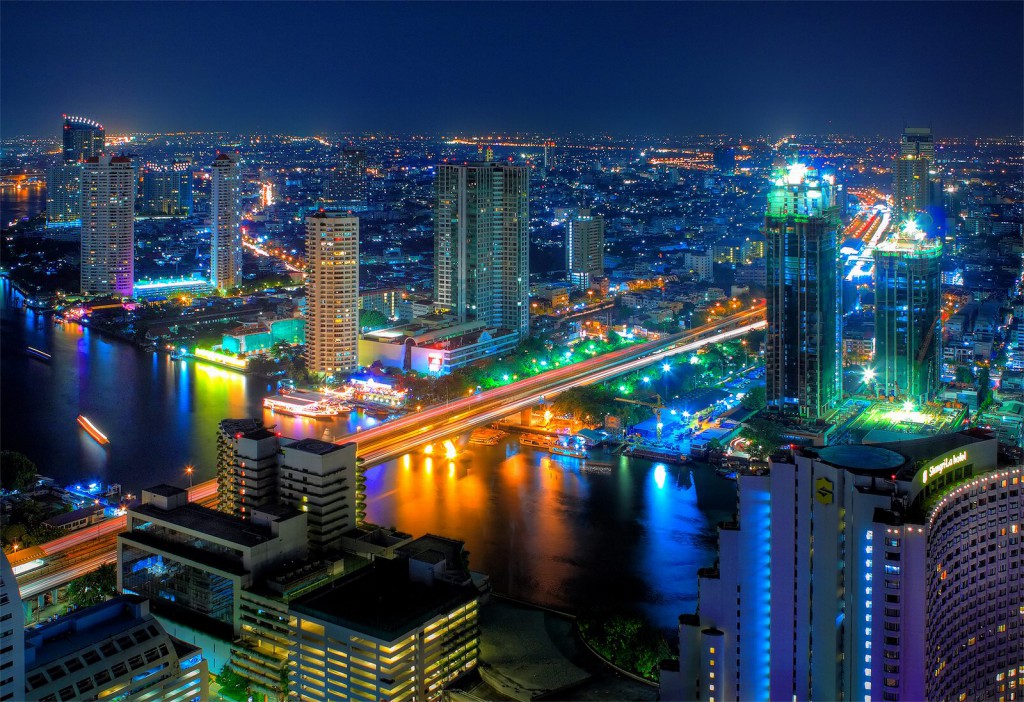
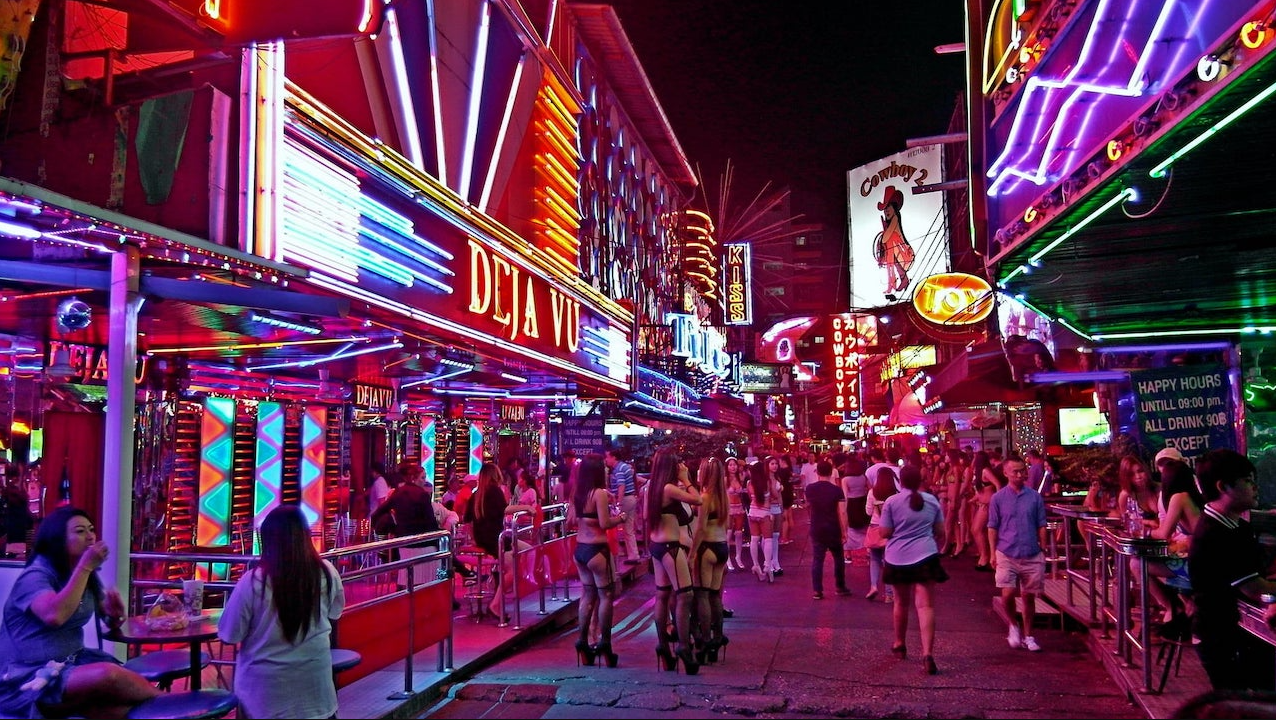
Thailand Prostitution Laws 2026: Illegal on paper, unstoppable in practice. Here is something that will strike you the moment you step out of BTS Nana Station on your first night in Bangkok. Three hundred meters away, across a street buzzing with tuk-tuks and street food vendors, sits a three-story building containing over thirty gogo bars, several ladyboy venues, and more neon than a Vegas side street. Hundreds of women. Thousands of visitors. Music is shaking the walls on every floor.
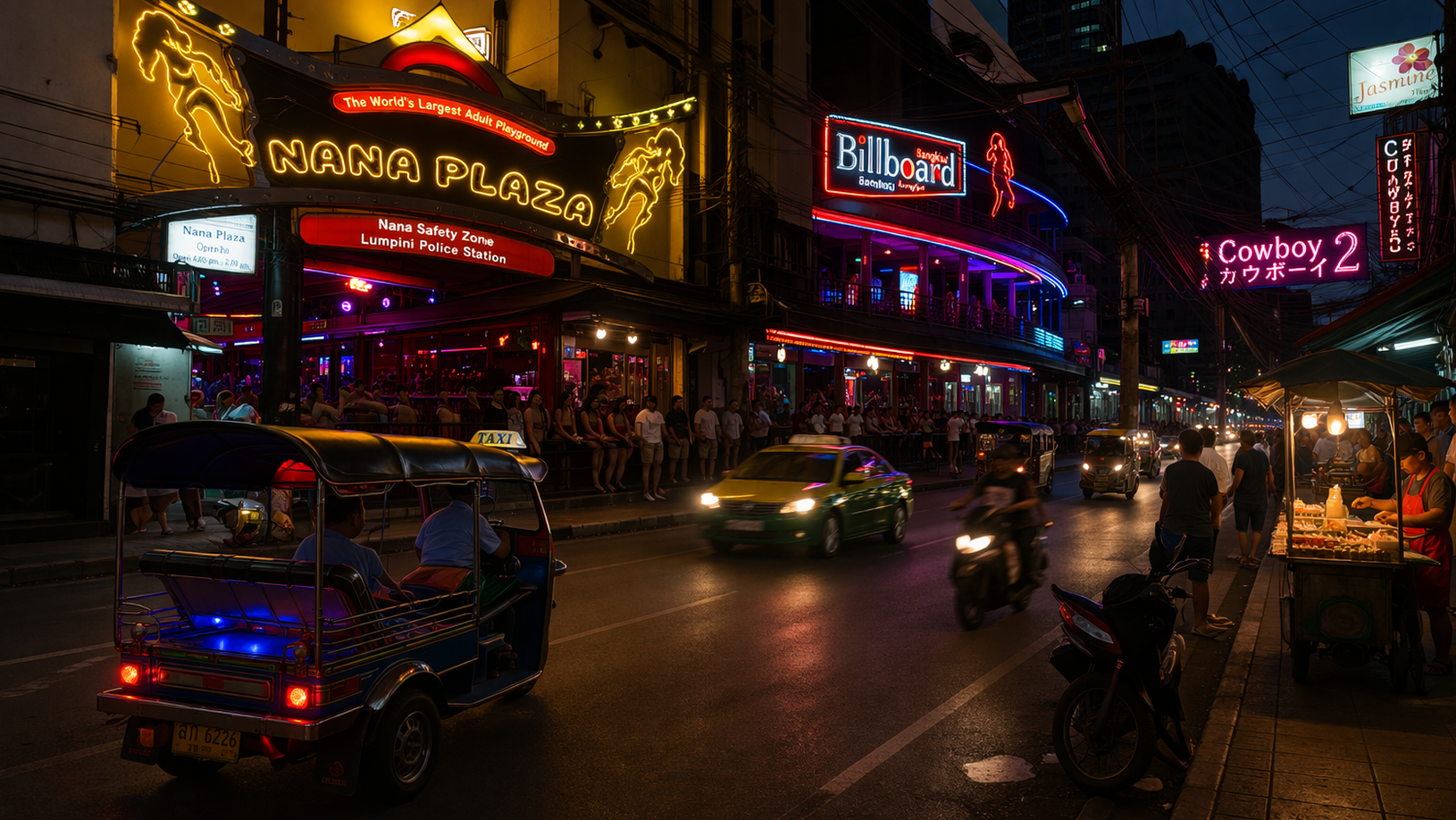
All of it, technically, illegal.
And yet there are security guards on the door, not to shut it down, but to keep it orderly. There are police in the area, not making arrests, but making sure things run smoothly. There are licensing fees being paid, taxes being collected, and businesses that have operated continuously for decades.
Welcome to the gap between Thai law and Thai reality. It is one of the widest gaps in the world, and understanding it will make your time in Bangkok considerably more interesting and considerably less confusing.
Thailand Prostitution Laws (2026) – in plain language
Thailand’s main piece of legislation on this subject is the Prevention and Suppression of Prostitution Act of 1996. Before that, there was a 1960 act, but the 1996 version is what governs things today.
Here is what the law actually says, stripped of the legalese:
Selling sex is a minor offense. A first-time conviction carries a small fine and possible short detention. In practice, individual sex workers are almost never prosecuted under this provision. The law knows where the real targets are.
Running a prostitution business – meaning operating a venue where prostitution takes place, acting as a procurer, or profiting from someone else selling sex is a serious criminal offense. Penalties range from fines in the hundreds of thousands of baht up to imprisonment. This is where the law has teeth.
Clients technically commit an offense too, though prosecutions of foreign tourists for this are essentially unheard of.
So on paper, the entire ecosystem around Nana Plaza, Soi Cowboy, and the soapy massage parlors of Ratchada should be shut down and its operators in prison. The reason that is not the case comes down to one elegant piece of legal architecture that has been in place since before the 1996 act was even written.
Why Prostitution Still Exists in Thailand
The Entertainment Places Act of 1966 is the key to understanding all of this. It created a licensing framework for “entertainment venues” which is a category broad enough to drive a very large, very profitable truck through.
Under this act, a venue can be licensed as a bar, a nightclub, a massage establishment, or a bathhouse. The license covers the physical space and its stated purpose. What the law cannot easily prove is what happens between consenting adults once money has changed hands in a licensed venue, especially when that money is ostensibly changing hands for something else entirely.
This is not an accident. The framework was designed with enough ambiguity to allow an entertainment economy to flourish while giving authorities the legal cover to intervene when they choose to. The “when they choose to” part is everything, and we will get to that.
How Gogo Bars Actually Work – The legal fiction explained
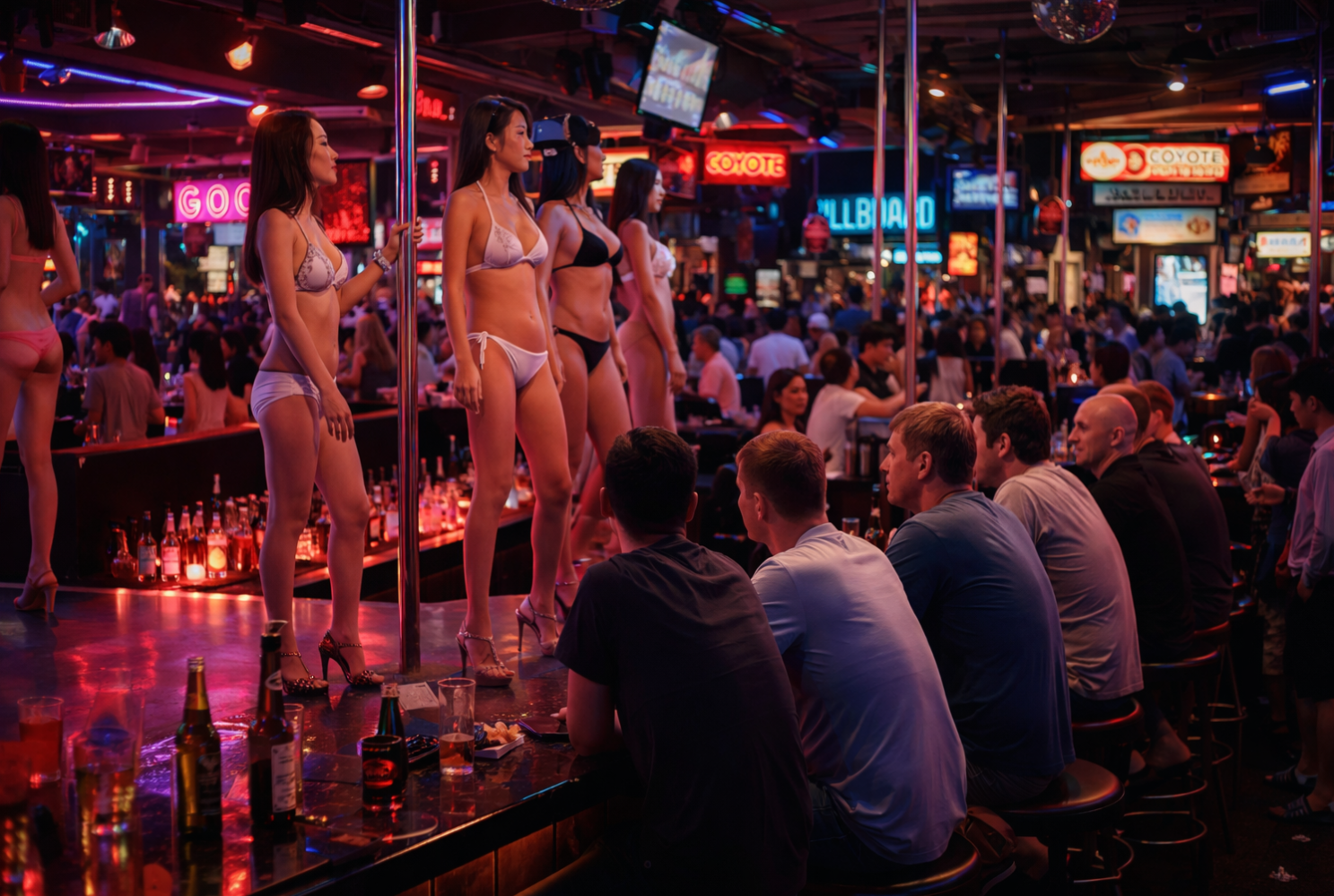
If you have spent any time in Bangkok’s nightlife scene, you already know the mechanics. But it is worth explaining exactly how the business model is constructed, because it is genuinely clever.
A gogo bar is licensed as an entertainment venue. It employs dancers as performers. Those performers have employment contracts. They dance on stage, they sit with customers, and they drink with customers. All of this is legal. The bar sells drinks. The bar sells lady drinks, overpriced beverages that the dancer receives a commission on. All of this is legal too.
Then there is the bar fine.
A bar fine is officially a “release fee” aka compensation to the bar for removing one of its performers from the premises during working hours. You are not, legally speaking, paying for anything other than the inconvenience you are causing the bar’s entertainment schedule. What happens after that performer walks out the door with you is, officially, none of the bar’s business and has nothing to do with any transaction that occurred on their licensed premises.
This is the legal fiction that the entire gogo bar economy runs on. It is understood by everyone involved, from the bar owners, the dancers, the customers, and the police. Nobody is under any illusions. But it works because the law, as written, cannot easily pierce it.
For a full breakdown of how the money side of this works, bar fines, lady drinks, short time, long time, our real cost of company in Thailand guide covers it in detail.
The best bars in Bangkok play this game the best
The top-tier venues at Nana Plaza and Soi Cowboy have essentially perfected this model over decades. Places like Billboard run a tight operation with good shows, reasonable drink prices, and consistent bar fines. The business works because it is run like a business, not a back-alley arrangement.
That professionalism is, paradoxically, part of what keeps it legal. A well-run venue with proper licensing, staff employment records, and a documented revenue stream from drinks and covers is a much harder target for prosecutors than a chaotic operation with no paper trail.
Tea money – The part nobody officially talks about
There is a line item that does not appear on any venue’s official accounts but is as real as the electricity bill: informal payments to local police and officials.
In Thai, the concept is sometimes called sin bon, which literally means “bribe money,” though that translation is harsher than how it functions in practice. In the entertainment district context, it operates more like an informal licensing surcharge. A regular payment to the right people ensures that your venue does not get raided during a slow Tuesday, that officers look the other way on minor infractions, and that you get advance notice if something bigger is coming.
This is not unique to Thailand. It is how informal economies interface with law enforcement in many parts of the world. In Bangkok’s nightlife districts, it has been institutionalized to the point where it is essentially a cost of doing business, factored into venue economics the same way rent is.
What it means practically for visitors: the bars you drink in have already paid for the right to operate tonight. Your bar fines are not going to get anyone arrested.
Soapy Massage Parlors Explained – A different animal entirely
If the gogo bar model is a gray area, the soapy massage industry in Bangkok operates in a slightly different shade of gray, one that has its own distinct legal wrapper and its own distinct clientele.
Soapy massage parlors, which are concentrated primarily in the Ratchadaphisek area rather than the tourist-facing nightlife districts, are licensed as bathhouses or special massage establishments. The licensing category predates the 1996 Act and has survived every reform discussion since.
The transaction structure here is more formal than a bar fine. You pay a session fee upfront. The fee covers the facility and, officially, a massage service. What actually happens during that session is understood by everyone involved, but does not appear in any documentation associated with the licensed establishment.
The soapy parlor industry caters heavily to a Thai-Chinese and Japanese clientele, which is part of why it operates with considerably less tourist visibility than Nana or Cowboy. It also tends to have more formal ownership structures; some parlors are significant commercial operations with dozens of employees and substantial annual revenues. That scale brings its own form of political protection.
Freelancers in Bangkok – legal risks explained
The one part of Bangkok’s adult economy where the legal architecture becomes genuinely fragile is freelancers, where women (and men) operate independently, without the institutional buffer of a bar or parlor behind them.
Freelancers work Sukhumvit Road, the stretch of Soi 4 outside Nana Plaza, the end of Soi Cowboy after the bars close, the basement of Thermae, and increasingly on apps and online platforms. They have no employer to provide plausible deniability, no licensed venue to conduct their business through, and no bar fine mechanism to launder the transaction.
This makes them more legally exposed than bar workers, not that arrests are common, but when enforcement operations do happen, freelancers are easier targets than venue operators with lawyers on retainer. But it mostly happens to foreign women who are offering these services. Mostly African and Eastern European women.
The economics of why women choose this route despite that exposure are worth understanding. A bar dancer gives a percentage of her lady drink commissions to the venue, pays part of her bar fine to the bar, and works set hours. A freelancer keeps everything she makes. The tradeoff is institutional protection for financial independence and many choose the latter.
For a full picture of how this part of the scene works and where to find it, see our Bangkok freelancers guide.
Dating apps and online platforms – old Industry, new wrapper
The most recent development in Bangkok’s gray economy is the migration of part of the freelancer market onto apps and platforms. ThaiFriendly, Fiwfan, Smooci, and similar platforms occupy an interesting legal space.
Thai law does not have well-developed provisions for online facilitation of prostitution in the way that some Western jurisdictions do, following legislation like FOSTA-SESTA in the US. Platforms operating from outside Thailand are particularly difficult to prosecute under Thai law, which means the online layer of this economy has expanded with relatively little interference.
What this means in practice: a significant portion of the freelance market has moved online, which has considerably changed the dynamic from the street-level hustle of a decade ago. The transactions are less visible, more negotiated in advance, and the selection process happens through messaging rather than a neon-lit soi.
For anyone navigating this space, the scam risk is real. The online layer has attracted its share of fraudsters, time-wasters, and people whose profiles bear little resemblance to reality. Our cautionary tale on online dating scams in Thailand is worth reading before you start swiping.
When the law is enforced (crackdowns explained)
If all of this operates so smoothly most of the time, what causes a crackdown? Because they do happen. Patpong’s dramatic contraction over the past decade is largely the result of sustained enforcement pressure that the other districts have not faced to the same degree.
Crackdowns in Thailand’s entertainment districts tend to be triggered by a fairly predictable set of factors:
Political transitions. New governments need to signal virtue. Ordering a series of high-profile raids on red light districts makes good press domestically and plays well with conservative constituencies. The raids rarely result in significant prosecutions, and the operators simply pay fines, close temporarily, and reopen. Many times these raids come with the conclusion that there is no prostitution found.
International pressure. Thailand appears annually in the US State Department’s Trafficking in Persons Report. A poor TIP Report rating has trade implications. When Thailand is under pressure to improve its ranking, enforcement activity visibly increases, particularly around anything that can be framed as trafficking-adjacent.
Local political disputes. Sometimes a crackdown on a specific venue is really about something else entirely, a licensing dispute, a land ownership conflict, or a personal grudge. The entertainment industry makes a convenient lever when someone with political connections wants to apply pressure. Some of the most influential people in Thailand own different entertainment venues.
What crackdowns almost never do is result in the permanent closure of the industry. A reopening, a reorganization, and a return to business have followed every major enforcement push in Bangkok’s history. The economic incentives are simply too strong for any of the involved parties, venue operators, local officials, and the Thai state itself to actually want permanent closure.
Patpong is the partial exception, and it illustrates the limits of enforcement even in the hardest-hit district. The gogo bars have contracted sharply, but the area has not died; it has shifted toward the night market, different venue types, and a more tourist-browsing crowd. The industry adapts.
Who actually gets in trouble
Let’s be direct about this, because it is what most people reading this actually want to know.
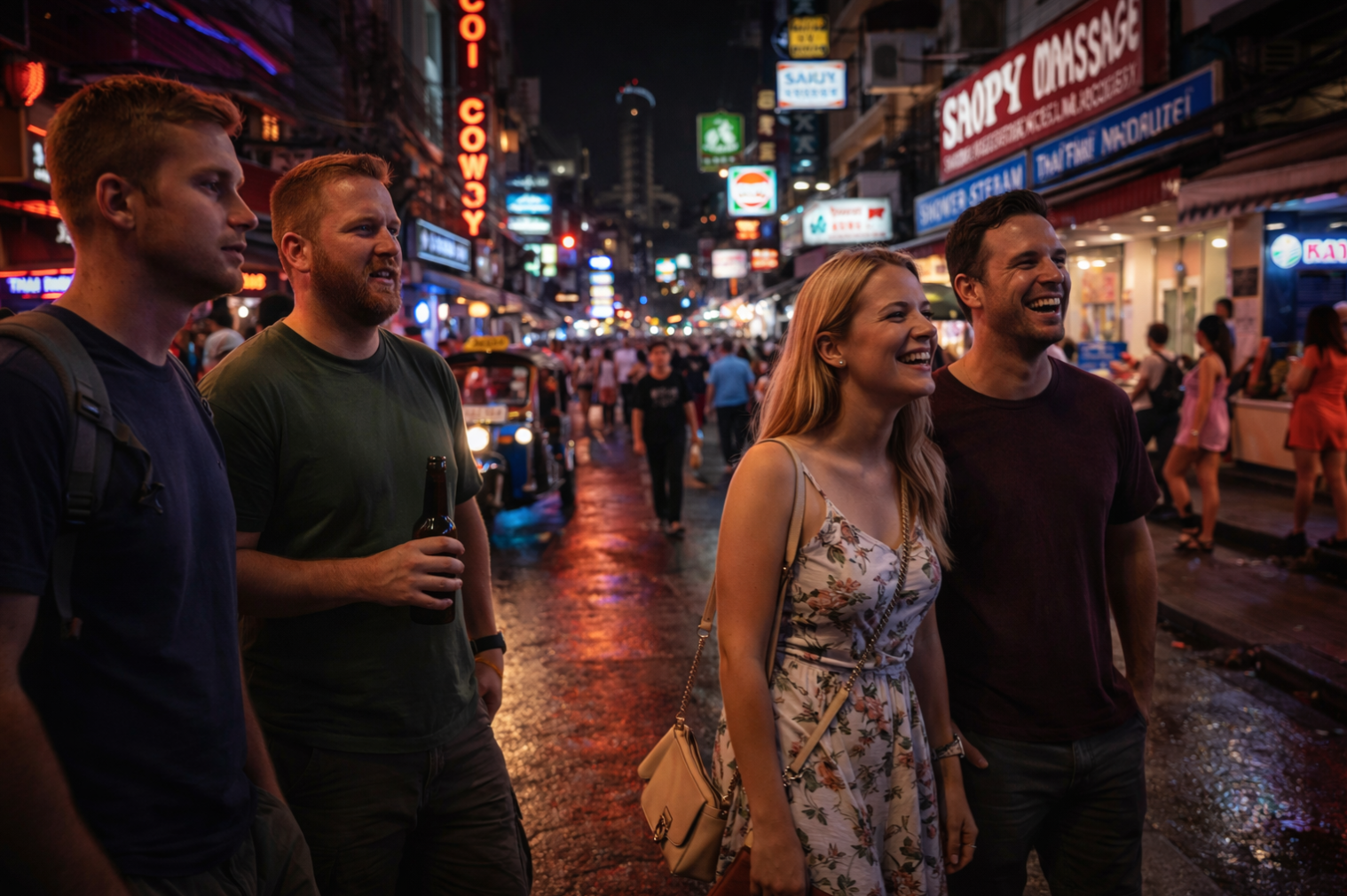
Foreign tourists getting prosecuted for paying for sex in Thailand is so rare as to be statistically negligible. It is not zero, and there have been cases, usually involving circumstances that attracted attention for other reasons, but it is not a realistic risk for someone having a normal evening in a licensed venue. This happens more often if you’re having wild sex parties and illegal substance use is involved.
Bar owners and operators face real legal exposure if they run a sloppy operation, fail to make the right informal payments, or attract political attention. The legal framework can be activated against them when someone with authority decides it should be. This also rarely leads to anything unless there are minors involved.
Women working in the industry face the most asymmetric legal exposure relative to the economic power they have in the system. Individual sex workers are theoretically the easiest to prosecute and the least protected. In practice, enforcement against individual workers is episodic and inconsistent but it is the one area where the law’s teeth are most likely to bite someone with limited resources to fight back.
Trafficking and minors is the area where enforcement is and should be genuinely serious. This is where Thai law intersects with international law, where prosecutions actually happen, and where the economic logic of tolerance breaks down entirely. Any venue operating with underage workers faces a completely different level of legal risk than the standard gray-area operation.
Will Thailand legalize prostitution?
Decriminalization of sex work has been discussed in Thailand on and off for years. Advocates argue it would improve health outcomes, reduce exploitation, allow taxation of a currently informal industry, and give workers better legal standing to report abuse. The economic case is straightforward – Thailand is already collecting some revenue from this industry indirectly (licensing fees, VAT on drinks, hotel taxes) but leaving an enormous amount on the table by keeping the core transactions informal.
The political case is harder. Thailand’s conservative and Buddhist institutional structures create strong headwinds against any move that could be characterized as the state endorsing prostitution. No Thai politician has found a way to champion decriminalization and survive the cultural backlash that would follow.
The most likely outcome, as of 2026, is continued stasis. The laws stay on the books, enforcement remains selective, the informal payments keep flowing, and Bangkok continues to operate one of the world’s most visible and economically significant adult entertainment economies while technically illegal, practically without serious interference.
Which is, when you think about it, a very Thai solution.
What This Means for Visitors
If you are visiting Bangkok’s nightlife scene, whether that is a night at Nana Plaza, a walk down Soi Cowboy, a visit to a soapy parlor, or something you arrange independently, the legal picture translates into a few practical realities:
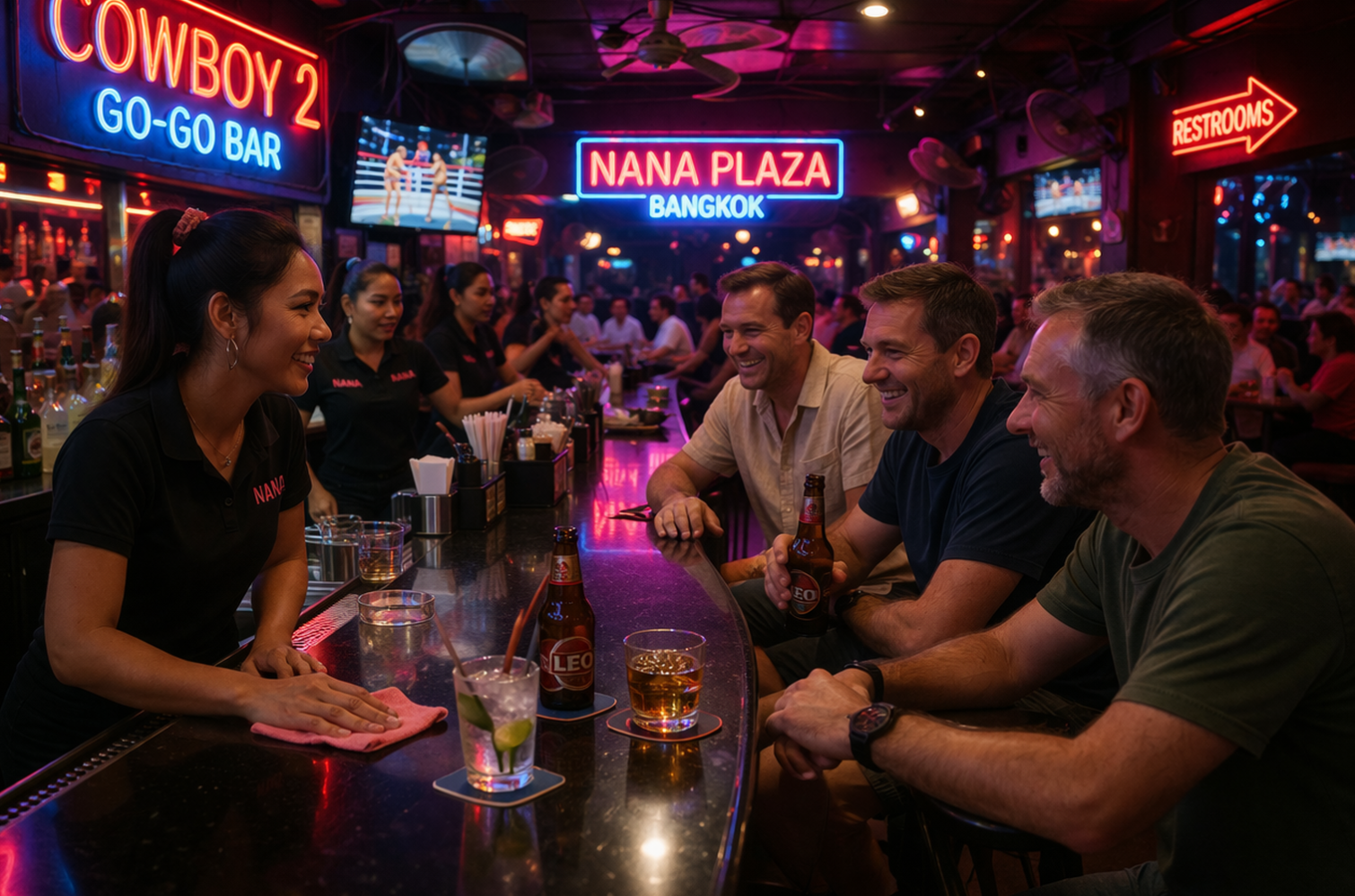
You are not going to get arrested for participating in the normal gogo bar ecosystem. Bar fines are legal. Lady drinks are legal. What happens after you leave a licensed venue is in a legal gray area that has never been enforced against foreign tourists in any systematic way.
Stick to established venues. The legal architecture protects venue operators who play the game properly, which means their customers get that protection too. Random street-level arrangements with no institutional structure behind them carry more risk, financial if not legal.
The financial risks are more real than the legal ones. The more likely way Bangkok’s nightlife costs you is through inflated prices, misunderstood arrangements, and the occasional person whose intentions toward your wallet are not entirely aligned with yours. Our guide on tourist money traps in Thailand and the story of the man who lost $53,000 to a Thai bar girl are both useful reads before your first night out. Not to scare you but just to go in with your eyes open.
Understanding the system makes the experience better. Knowing that the bar fine is a legal fiction designed to protect the venue, that the lady drink commission matters to the woman you’re buying it for, and that the whole ecosystem has been engineered to function smoothly for all involved, that context makes everything more legible and more enjoyable. Bangkok’s nightlife is not confusing. It just has rules that are not written anywhere officially.
Planning your first visit? Start with our Bangkok nightlife FAQ, which covers the basics, or jump straight into the Thai bar girl culture guide to understand how the scene actually works from the inside.